
Workshop: Applying thematic analysis to explore perceptions and self-reported behaviours

- Date
- Wednesday 19 November 2025, 1-4pm
- Location
- Coach House, Hillary Place (School of Education)
- Registration
- Click this link to register
Applying thematic analysis to explore perceptions and self-reported behaviours: using students’ interview and reflective diary data as examples.
This event is co-organised with the Social Research Methods Centre.
Thematic analysis is widely used in social science research for examining participants’ perceptions through interviews, focus groups and learning diaries. It can also reveal participants’ behaviours through observations and conversation histories with both human and non-human learning partners. However, novice qualitative researchers often find thematic analyses challenging due to the complexity and richness of qualitative data, which could lead to confusion, frustration and inadequate data interpretations.
This workshop aims to introduce a systematic approach to conducting reflective thematic analysis (Braun & Clarke, 2022; Clarke & Braun, 2017), drawing upon my research and supervision experience. It will cover:
- Core concepts underpinning thematic analysis
- Key steps in thematic analysis
- Strategies for reflection to rigour and quality
Participants will engage in hands-on activities using authentic interview and reflective diary data from two educational projects.
You can access the slides of the workshop here: ThematicAnalysisWorkshop HZ.
References
Braun, V., & Clarke, V. (2022). Thematic analysis : a practical guide. SAGE.
Clarke, V., & Braun, V. (2017). Thematic analysis. The journal of positive psychology, 12(3), 297-298. https://doi.org/10.1080/17439760.2016.1262613
Registration
The workshop is free for staff and postgraduate researchers at the University of Leeds, but registration is required.
Please follow this link to register.
Speaker
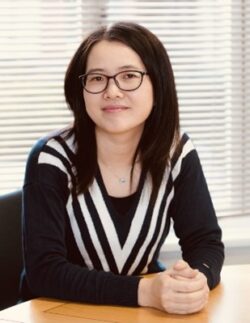
Dr Huahui Zhao is an Associate Professor in Language Education at the University of Leeds, where she is leading the Hub for Research Innovation, Culture and Education (RICE) in the School of Education. Her research focuses on assessment and testing in both traditional and technology-enhanced settings, with a strong interest in innovative research methodologies. She has successfully led and completed multiple funded projects and has published on relevant areas widely. Her current work focuses on how GenAI impacts learning and assessment in higher education and how to develop learners’ critical thinking to foster their critical GenAI literacy.